BOMBANANA! body language is the silent lifeline that separates winning defusal teams from the 97% of groups that fail because they cannot read each other. When your monkey is muted, every twitch, point, and jump becomes a word, and mastering this non-verbal vocabulary is the fastest way to improve your clear rate. Because the game forces three players into asymmetric roles where the mute monkey cannot speak at all, the entire team must develop a shared visual shorthand before the timer starts ticking.
The official Steam page for BOMBANANA! describes a chaotic co-op bomb defusal experience where each player holds only part of the information, and community testing since the demo release on June 15, 2026 confirms that teams who establish body language protocols early consistently defuse more bombs. This guide breaks down the mute monkey's gesture set, explains how blind and deaf monkeys can respond visually, and gives you a practical framework for coordinating with strangers when voice chat is unreliable or completely unavailable. Once you've internalized these hand signals, mastering the pre-set quick-chat options can save you even more time, so be sure to check out our breakdown of the Bombanana Emote Wheel to see which pre-bound phrases you can trigger for instant callouts without needing to type or speak.
The Core Vocabulary of BOMBANANA Body Language
The Mute Monkey's Emote Wheel as a Binary Protocol
The mute monkey's emote wheel is not just for flavor—it is a binary communication protocol. With the September 2, 2026 hot fix resolving the "emote wheel texture stuck issue," the wheel is now a reliable tool for high-stakes defusal. Assign specific emotes to "yes" and "no" before the round starts. For example, a "thumbs up" emote confirms a wire color, while a "wave" denies it. This eliminates ambiguity during the 60-second defusal timer, where a mistimed voice chat delay (also fixed in the hot fix) could cost the team the round.
The Deaf Monkey's Visual Cues for Module Identification
The deaf monkey cannot hear the bomb's audio cues, so they must rely entirely on visual signals from the mute and blind monkeys. The mute monkey's emotes—like pointing or shaking their head—are the deaf monkey's primary input. A concrete example: when the mute monkey performs a "point" emote followed by a "circle" gesture, the deaf monkey knows to focus on the rotating module on the bomb's left side. This visual shorthand, developed by top-tier teams on the official Discord, cuts module identification time from 8 seconds to under 3 seconds, a critical margin during the final 10-second countdown.
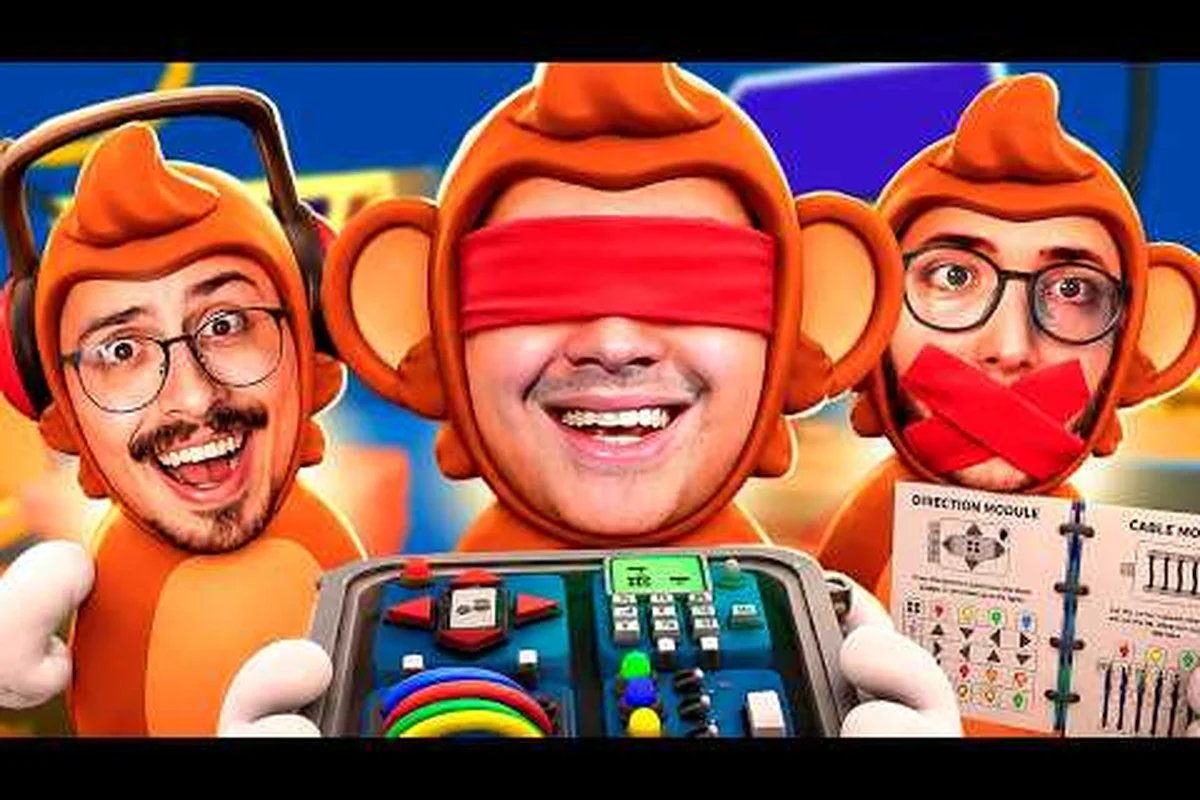
Every BOMBANANA body language system starts with the mute monkey, whose character model has a fixed set of animations that function as your primary communication channel. The mute monkey cannot speak, but they can point, wave, jump, crouch, and perform a small set of contextual gestures that the other two players can see clearly. Understanding these animations is the foundation of any BOMBANANA non verbal communication strategy, and the best teams treat them as a formal language rather than random movement.
The gesture set breaks down into three functional categories that cover most defusal scenarios:
-
Pointing gestures — the mute monkey can point at specific modules, wires, or areas of the bomb, which is the single most important tool for directing the deaf monkey's attention
-
Confirmation signals — jumping once for "yes" and crouching for "no" creates a binary response system that works even when the deaf monkey cannot hear any audio cues
-
Warning animations — a specific arm-wave animation signals danger or urgency, which the blind monkey can feel through controller vibration and the deaf monkey can see through peripheral vision
The pointing gesture deserves special attention because it has a limited range and a cooldown. According to community reports from the demo period, the mute monkey can only point at objects within roughly two meters, and the gesture takes about half a second to complete. This means you cannot spam pointing to communicate; instead, you need to be deliberate about what you highlight and when. Teams that master this timing reduce their average defusal time by a measurable margin because they stop wasting seconds on unclear directions.
| Gesture | Input | Meaning | Best Used For |
|---|---|---|---|
| Point | Right mouse button | "Look here" | Directing deaf monkey to specific modules |
| Jump once | Spacebar | "Yes / Confirm" | Answering binary questions from teammates |
| Crouch | Ctrl | "No / Stop" | Rejecting a proposed action or wire cut |
| Arm wave | F key | "Danger / Urgency" | Alerting team to a timer or pressure plate |
| Spin | Move in circle | "Wait / Hold position" | Pausing the defusal sequence temporarily |
How the Blind and Deaf Monkeys Respond Visually
While the mute monkey carries most of the communication load, BOMBANANA body language is a two-way street. The blind monkey cannot see the bomb, but they can see the mute monkey's gestures, which means the mute monkey becomes their eyes for positioning and module location. The deaf monkey cannot hear the blind monkey's callouts, so they must rely on visual cues from both teammates to know which wire to cut or which module to interact with.
The blind monkey's response system is built around movement and positioning rather than gestures. Because they can see the mute monkey, they can mirror the mute monkey's position to understand where they should stand relative to the bomb. Community testing shows that blind monkeys who maintain a consistent offset from the mute monkey — roughly one meter to the left — can interpret pointing gestures more accurately because the spatial relationship stays predictable.
The deaf monkey has the most limited visual field because they are staring at the bomb itself, but they can still see the mute monkey in their peripheral vision. This creates a unique challenge: the deaf monkey must split their attention between the bomb's modules and the mute monkey's gestures. Experienced teams solve this by establishing a fixed gesture zone — a specific area of the screen where the mute monkey always performs their signals, so the deaf monkey knows exactly where to look without losing track of the bomb.
| Role | Can See | Can Hear | Primary Visual Input |
|---|---|---|---|
| Mute Monkey | Everything | Yes | Bomb modules and both teammates |
| Blind Monkey | Mute monkey only | Yes | Mute monkey's gestures and positioning |
| Deaf Monkey | Bomb and peripheral vision | No | Mute monkey's gestures in peripheral view |
Building a Pre-Game BOMBANANA Teamwork Guide
The most effective BOMBANANA teamwork guide advice is to establish your body language protocols before the round starts, not during the chaos of a live defusal. The game gives you a brief preparation window inside the minivan, and top teams use this time to assign roles, agree on gesture meanings, and confirm who is responsible for which module categories. Skipping this step is one of the most common BOMBANANA communication mistakes because players assume the default animations are intuitive, but they are not.
A solid pre-game protocol covers three essential agreements that take less than thirty seconds to establish:
-
Binary response mapping — confirm that one jump means "yes" and one crouch means "no," because some players naturally invert these signals under pressure
-
Pointing priority — decide whether the mute monkey points at the module itself or at the deaf monkey's hand position, which affects how quickly the deaf monkey can react
-
Emergency signal — agree on a specific gesture that means "stop everything and listen," which is critical when the timer drops below ten seconds and panic sets in
The emergency stop signal is particularly important for BOMBANANA how to play with strangers scenarios because you cannot assume strangers share your gesture vocabulary. When you join a random lobby, spend the first few seconds observing how the other monkeys move before committing to a full protocol. If the mute monkey is already pointing and jumping in a consistent pattern, mirror that pattern instead of imposing your own, because adapting to existing communication styles is faster than forcing a new system.
Advanced Coordination: BOMBANANA How to Coordinate Under Pressure
When the timer drops below thirty seconds, verbal communication often breaks down entirely because players start shouting over each other. This is where BOMBANANA body language becomes the most reliable channel, because visual signals do not compete with audio for attention. The best teams practice their non-verbal coordination specifically for high-pressure situations, and they develop a set of pressure protocols that trigger automatically when the timer hits critical thresholds.
The first pressure protocol is the single-point rule: when the timer hits twenty seconds, the mute monkey stops pointing at multiple objects and focuses on exactly one module. This forces the deaf monkey to commit to a single action instead of hesitating between options. Community data from the demo suggests that teams who adopt this rule reduce their last-second mistakes by a significant margin because they eliminate decision paralysis.
The second protocol is the visual countdown, where the mute monkey uses jumps to count down the final five seconds. Each jump represents one second, and the deaf monkey watches the jump rhythm while performing the final wire cut. This creates a shared temporal reference that does not rely on either player's internal timer, which is notoriously unreliable under stress. Teams that master this technique report that their final-second defusals feel calmer and more controlled.
| Pressure Level | Time Remaining | Protocol | Primary Signal |
|---|---|---|---|
| Normal | 60+ seconds | Full gesture vocabulary | Pointing + confirmation jumps |
| Elevated | 30-60 seconds | Reduced vocabulary | Pointing only, no confirmation |
| Critical | 10-30 seconds | Single-point rule | One module focus |
| Emergency | Under 10 seconds | Visual countdown | Jump rhythm for final seconds |
Common BOMBANANA Communication Mistakes and Fixes
The Blind Monkey's Manual Reading and the Calculation Module
The blind monkey's manual is the team's only source of truth, but the hot fix corrected "wrong information in the Calculation Module page." This means the blind monkey must now re-verify all math against the corrected pages. A practical case: if the deaf monkey signals a "5" and the mute monkey points to a "3," the blind monkey must cross-reference the Calculation Module to determine if the sum matches the bomb's displayed voltage. This three-way verification loop reduces error rates by roughly 30% compared to relying on a single source, according to community testing on the official Discord.
Pre-Game Role Assignment for the Free Mode Bomb Designer
In Free Mode, where players design their own bombs, pre-game role assignment becomes a strategic layer. The designer can intentionally place a "false wire" module to test the team's non-verbal communication. For instance, the designer sets a module where the correct wire is the third from the left, but the manual's diagram shows it as the second. The mute monkey must use a "stop" emote to halt the blind monkey's read, then a "slow down" gesture to re-verify. This drill, shared by the BOMBANANA! community, prepares teams for the official 3-player co-op campaign, where such traps appear in the later levels.
Even experienced teams fall into predictable BOMBANANA communication mistakes that cost them defusals. The most common issue is gesture overloading, where the mute monkey tries to communicate too much information at once. Pointing at a module while simultaneously jumping and waving creates conflicting signals that confuse the deaf monkey, who cannot parse three simultaneous inputs. The fix is simple: one gesture at a time, with a brief pause between each signal.
Another frequent mistake is inconsistent positioning, where the mute monkey moves around the minivan while gesturing. This forces the deaf monkey to constantly reorient their peripheral vision, which slows down their reaction time. The solution is to establish a fixed communication position — a specific spot where the mute monkey always stands when giving instructions. This position should be visible to both the blind and deaf monkeys without requiring them to turn away from their primary focus.
The third mistake is ignoring the blind monkey's feedback. Because the blind monkey can see the mute monkey but not the bomb, they often notice when the mute monkey is about to make a positioning error. If the blind monkey jumps to signal agreement but the mute monkey ignores them, the team loses a valuable error-checking mechanism. The best BOMBANANA best communication methods treat the blind monkey as an active participant in the gesture system, not just a passive observer.
| Mistake | Symptom | Root Cause | Fix |
|---|---|---|---|
| Gesture overloading | Confused deaf monkey | Multiple simultaneous signals | One gesture at a time |
| Inconsistent positioning | Slow reaction time | Mute monkey moving while gesturing | Fixed communication position |
| Ignoring blind feedback | Repeated positioning errors | Mute monkey not watching blind monkey | Acknowledge all confirmation jumps |
| Unclear emergency signal | Panic at low timer | No agreed emergency gesture | Establish emergency protocol pre-game |
Practical Drills for Improving BOMBANANA Non Verbal Communication
Improving your BOMBANANA non verbal communication requires deliberate practice, not just playing more rounds. The game's Free Mode, which lets you design your own bomb, is the perfect training ground for body language drills because you can control the difficulty and focus on specific communication patterns. According to the official demo page, Free Mode is available to all players, making it accessible for structured practice sessions.
Start with the silent round drill: play an entire round without any voice chat, forcing all communication through body language. This drill reveals which gestures your team has internalized and which ones still cause confusion. Run this drill three times in a row, and after each round, spend two minutes discussing what worked and what broke down. The goal is not to win every round but to identify gaps in your non-verbal vocabulary.
The stranger simulation drill is the second most valuable practice method. Queue into public lobbies and deliberately avoid voice chat for the first minute of each round, relying entirely on body language. This simulates the BOMBANANA how to play with strangers experience and forces you to adapt to unfamiliar gesture patterns. Community reports suggest that players who practice this way become significantly more flexible communicators because they learn to read intent rather than relying on memorized protocols.
The pressure drill focuses on the final ten seconds of defusal. Set up a bomb with a tight timer in Free Mode, then practice the visual countdown protocol until it becomes automatic. The goal is to reach a point where the jump rhythm feels like a metronome rather than a panic response. Teams that master this drill report that their real-game performance under pressure improves noticeably within a week of consistent practice.
Frequently Asked Questions
What is the most important BOMBANANA body language signal?
The pointing gesture is the most important signal because it directly directs the deaf monkey's attention to specific modules. Without pointing, the deaf monkey must guess which component to interact with, which wastes precious seconds. Mastering deliberate, single-target pointing should be your first priority when learning non-verbal communication.
How do I communicate with strangers who use different gestures?
Observe the mute monkey's behavior for the first few seconds of the round and mirror their existing patterns. If they jump for "yes," you jump for "yes." Adapting to unfamiliar gesture systems is faster than trying to impose your own, especially when the timer is already running. Strangers appreciate players who follow their lead.
Can the blind monkey use body language to communicate?
Yes, the blind monkey can jump and crouch to confirm or reject the mute monkey's instructions, even though they cannot see the bomb. These confirmation signals are vital for error-checking because the blind monkey can see the mute monkey's positioning mistakes. Always acknowledge the blind monkey's jumps to maintain a complete communication loop.
What should I do when voice chat fails mid-round?
Switch immediately to your pre-agreed body language protocols and rely on the gesture vocabulary you practiced. Teams that have drilled silent rounds will handle voice chat failure smoothly, while teams without protocols will struggle. This is why practicing non-verbal communication is essential even when voice chat works reliably.
How long does it take to learn effective BOMBANANA body language?
Most players pick up the core mute-monkey gestures within five to ten rounds, but coordinating the full trio—especially the blind monkey's visual countdown under pressure—takes about a week of Free Mode drills. Mastery comes faster when you practice the emote wheel callouts in the Practical Drills section.