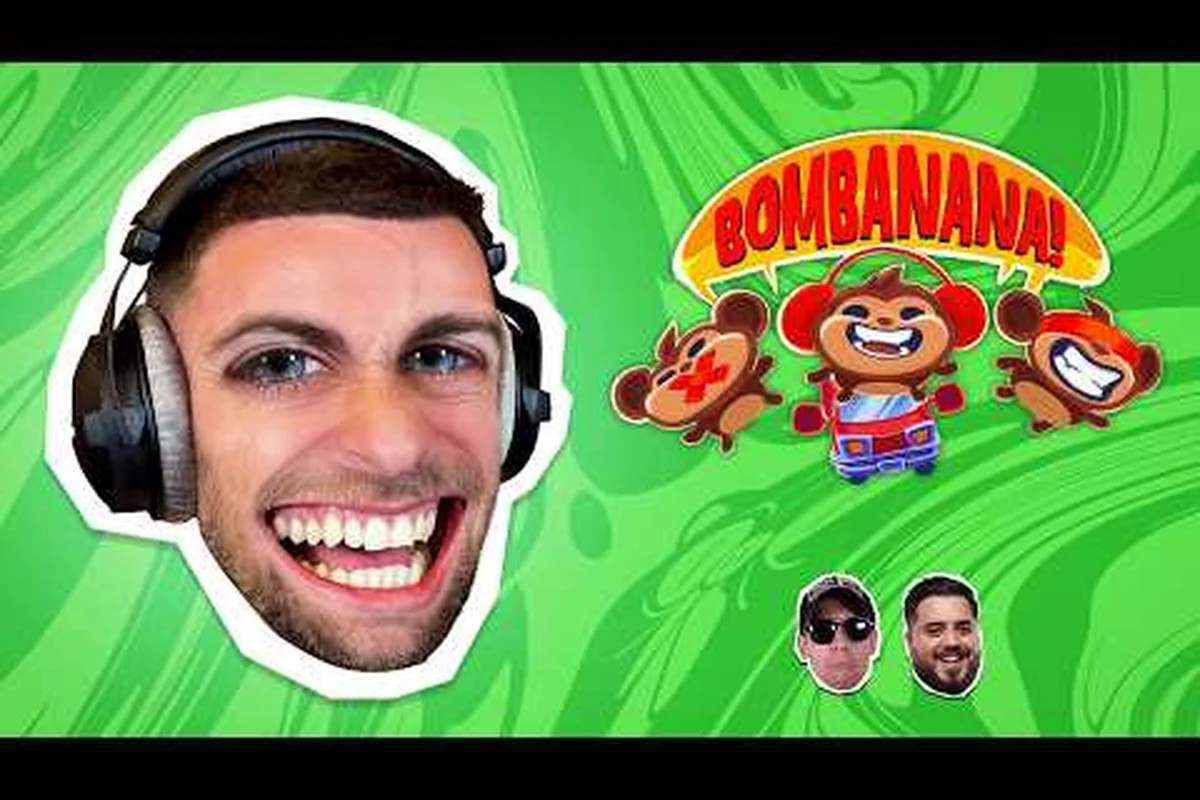
BOMBANANA core gameplay turns three monkeys into a bomb-defusal team where communication is deliberately broken. You need to understand the BOMBANANA objective quickly because every second counts inside that minivan workshop. Discover how the asymmetric roles create chaotic fun and learn exactly what to do in game before the banana bomb goes BOOM.
Understanding the BOMBANANA Objective
The primary BOMBANANA objective is straightforward yet terrifyingly complex: defuse a ticking banana bomb before the timer reaches zero. You and two teammates sit inside a converted minivan that serves as your mobile bomb workshop, and the only way to survive is to cut the right wires, press the correct buttons, and solve puzzle modules faster than the fuse burns down. According to the official Steam store page, the game thrives on this exact tension, forcing three players into a cooperative scenario where no single person holds enough information to succeed alone.
The Three Asymmetric Monkey Roles
The core of BOMBANANA core gameplay revolves around three deliberately handicapped monkeys. Each character sees, hears, or speaks different pieces of the puzzle, which means teamwork is not optional—it is the only mechanic standing between you and a massive explosion. Understanding what each monkey can and cannot do is the first step toward mastering the BOMBANANA gameplay loop.
-
Blind Monkey: Can hear everything and speak freely, but cannot see the bomb modules at all. This player must interpret verbal descriptions from the Deaf Monkey and relay instructions to the Mute Monkey.
-
Deaf Monkey: Can see the bomb and all its modules clearly, but cannot hear voice chat. This player communicates using the in-game emote wheel and text-based quick chats to describe what needs to be done.
-
Mute Monkey: Can hear everything and see the bomb, but cannot speak. This player is the hands-on operator, physically interacting with modules based entirely on instructions received from the other two teammates.
Why Information Asymmetry Drives the Gameplay Loop
The BOMBANANA gameplay loop exists because of this forced information asymmetry. The Deaf Monkey sees a complex wire puzzle but cannot tell anyone about it verbally, so they use quick chats to describe colors and positions to the Blind Monkey. The Blind Monkey then processes that information and shouts instructions to the Mute Monkey, who must execute the physical cuts without being able to ask clarifying questions. This telephone-game mechanic ensures that every single round is filled with miscommunication, panic, and hilarious failures, which is exactly why players keep coming back for more.
| Monkey Role | Can See Bomb | Can Hear Voice | Can Speak | Primary Responsibility |
|---|---|---|---|---|
| Blind Monkey | No | Yes | Yes | Translates visual quick chats into verbal instructions |
| Deaf Monkey | Yes | No | No (Emotes only) | Describes bomb modules using visual quick chat system |
| Mute Monkey | Yes | Yes | No (Emotes only) | Executes physical defusal actions based on heard instructions |
The BOMBANANA how rounds work mechanic becomes immediately clear once you experience this role separation firsthand. You can explore deeper mechanical breakdowns in our BOMBANANA gameplay guide, which covers advanced module interactions and free mode strategies. The roles are fixed for the entire match, so practicing your specific monkey's communication tools is essential for consistent wins.
How Rounds Work in BOMBANANA
Understanding BOMBANANA how rounds work is crucial because the structure dictates how you approach every single defusal attempt. A round begins the moment the minivan doors lock and the bomb spawns on the workbench, immediately starting a countdown timer that gives your team a limited window to solve every module. The round ends only when the bomb is fully defused or the timer hits zero and everyone goes BOOM.
Round Initiation and Timer Mechanics
When a round starts, the bomb generates a random set of puzzle modules, and the Countdown Timer begins ticking immediately. Player reports indicate that the timer length scales with the number of modules attached to the bomb, meaning harder bombs give you more total time but require significantly more coordination. The pressure ramps up because certain modules feature secondary timers, such as the Calculation Module, which recently received a hotfix to correct wrong information displayed on its manual page.
Module Generation and Difficulty Scaling
As you progress through successive rounds, the BOMBANANA gameplay loop introduces increasingly complex modules. Early rounds might feature simple wire-cutting puzzles where the Deaf Monkey just needs to indicate which colored wire to cut, but later rounds add layers like sequence puzzles, Morse code inputs, and logic gates that require all three monkeys to relay multi-step instructions perfectly. The difficulty scaling ensures that veterans remain challenged while newcomers can learn the ropes on simpler configurations.
| Round Phase | Duration | Key Actions | Win Condition Check |
|---|---|---|---|
| Initiation | 5 seconds | Bomb spawns, roles assigned, timer starts | Verify all three players are ready |
| Active Defusal | 2-5 minutes | Solve modules, manage secondary timers | All modules disarmed |
| Crisis Management | Variable | Handle strikes, recover from miscommunication | No more than 3 strikes accumulated |
| Completion | Instant | Final module solved, bomb disabled | Defusal confirmed, score awarded |
The BOMBANANA how to win a round question ultimately comes down to how well your team manages these phases. You can study the broader session pacing in our BOMBANANA round structure breakdown, which details how match length affects replayability. Winning requires not just speed, but the ability to recover gracefully when the Mute Monkey pulls the wrong wire and the bomb issues a strike.
The Core Gameplay Loop Explained
The BOMBANANA gameplay loop is a continuous cycle of information gathering, translation, and execution. Every time a new module appears on the bomb, the team must run through this loop flawlessly to make progress. Breaking down the loop into distinct steps helps teams identify where their communication breakdowns occur, which is essential for improving your win rate over time.
Step-by-Step Information Relay Cycle
The loop begins when the Deaf Monkey spots a new module and uses the Emote Wheel to identify it, sending a visual quick chat to the Blind Monkey's screen. The Blind Monkey must then decode that visual information, cross-reference it with the physical bomb manual, and formulate a clear set of instructions to shout to the Mute Monkey. Finally, the Mute Monkey executes the physical action—cutting a wire, pressing a button, or rotating a dial—and the loop restarts for the next module until the bomb is fully disarmed.
-
Module Identification: Deaf Monkey spots the module type and uses quick chat to name it.
-
Manual Cross-Reference: Blind Monkey looks up the module rules in the digital manual.
-
Instruction Formulation: Blind Monkey translates rules into actionable verbal steps.
-
Physical Execution: Mute Monkey performs the action on the bomb without speaking.
-
Verification Loop: Deaf Monkey confirms if the action was correct via visual feedback.
Common Communication Breakdowns
Most failures in the BOMBANANA gameplay loop happen during the translation phase between the Deaf and Blind monkeys. Because the Deaf Monkey cannot use voice chat, they rely entirely on the quick chat system, which sometimes lacks the specificity needed for complex modules. Community data suggests that teams using the official Discord server to coordinate custom quick chat shorthand significantly improve their translation speed, reducing the time spent guessing what the Deaf Monkey means by a specific emote.
| Loop Step | Common Failure Point | Impact on Round | Recovery Strategy |
|---|---|---|---|
| Module ID | Wrong emote sent | Blind Monkey reads wrong manual page | Deaf Monkey cancels and re-sends emote |
| Cross-Reference | Blind Monkey reads wrong rule | Incorrect instructions given | Mute Monkey pauses before executing |
| Instruction | Ambiguous verbal description | Mute Monkey cuts wrong wire | Use directional shorthand only |
| Execution | Mute Monkey mishears command | Strike issued by bomb | Blind Monkey repeats command louder |
Mastering this loop is the essence of BOMBANANA what to do in game, because without a solid relay cycle, even the simplest bombs become impossible. The loop demands constant attention, as stepping away for even a few seconds can cause the Blind Monkey to miss a critical quick chat, cascading into a total communication failure and a wasted strike.
How to Win a Round Consistently
Winning consistently requires your team to move beyond panic and develop reliable communication protocols. The BOMBANANA how to win a round question is less about raw puzzle-solving speed and more about minimizing translation errors between the three monkeys. Teams that establish clear shorthand and practice their specific role responsibilities will defuse bombs far more efficiently than groups relying on improvised chaos.
Strike Management and Recovery
Every bomb in BOMBANANA core gameplay comes with a Strike System that punishes mistakes without instantly ending the round. When the Mute Monkey cuts the wrong wire or enters an incorrect sequence, the bomb issues a strike, and the Countdown Timer accelerates, reducing the time you have to solve the remaining modules. According to player reports, the standard threshold is three strikes before detonation, meaning you have a small buffer for miscommunication but cannot afford to waste it on careless errors.
Optimizing the Emote Wheel
The Deaf Monkey's Emote Wheel is the most critical communication tool in the game, because it is the only way to convey visual information without voice chat. Optimizing this wheel by organizing the most frequently used module identifiers—like wire colors, battery types, and port names—into easily accessible slots drastically reduces the time needed for the translation phase. Players who take the time to customize their emote layouts before diving into serious defusal sessions report significantly higher win rates.
| Strategy | Blind Monkey Role | Deaf Monkey Role | Mute Monkey Role |
|---|---|---|---|
| Shorthand Codes | Memorize 2-letter codes | Assign codes to emote slots | Execute based on heard codes |
| Strike Recovery | Call out remaining time | Re-identify failed module | Wait for corrected instructions |
| Timer Management | Announce time at intervals | Monitor secondary timers | Work on fastest modules first |
| Emote Optimization | Suggest wheel layouts | Customize quick chats | Confirm execution visually |
Developing these protocols directly answers BOMBANANA what to do in game when the pressure mounts. You can find more advanced survival tactics in our BOMBANANA mistakes to avoid article, which highlights common pitfalls that ruin otherwise promising defusal attempts. Consistent wins come from disciplined communication, not frantic guessing.
Advanced Defusal Strategies and Scenarios
Once your team masters the basic BOMBANANA gameplay loop, advanced strategies become necessary to handle the hardest modules the game throws at you. These strategies involve anticipating module combinations, managing overlapping timers, and developing specialized communication protocols for the most complex puzzles. Advanced play is what separates teams that survive the early rounds from those that consistently defuse high-tier bombs.
Handling Simultaneous Module Timers
Some bombs feature modules with independent Secondary Timers that demand attention while the main countdown continues. The challenge here is that the Mute Monkey might need to hold a button on one module while waiting for a specific signal on another, requiring the Blind Monkey to track multiple information streams simultaneously. Experienced teams handle this by assigning specific callouts for each active timer, ensuring the Mute Monkey knows exactly when to switch attention between modules without losing progress on either.
Designing Custom Bombs in Free Mode
The free mode allows players to design their own bomb configurations, which is an invaluable tool for practicing specific module combinations. By creating bombs that isolate the modules your team struggles with, you can drill the BOMBANANA how rounds work mechanics in a controlled environment without the pressure of a full campaign run. This practice mode is essential for developing the muscle memory and communication shorthand needed to survive the chaotic later rounds.
| Advanced Scenario | Communication Requirement | Execution Difficulty | Recommended Practice Tool |
|---|---|---|---|
| Dual Timer Modules | Split attention callouts | High | Free Mode custom bombs |
| Morse Code Inputs | Rhythmic verbal relay | Very High | Solo practice runs |
| Logic Gate Puzzles | Multi-step instruction chains | Extreme | Dedicated logic drills |
| Hidden Wire Traps | Process-of-elimination logic | Medium | Standard campaign replay |
These advanced scenarios push the BOMBANANA objective to its limits, testing whether your team can maintain composure when multiple modules demand simultaneous attention. The free mode is not just a sandbox; it is a critical training ground where teams refine their relay cycles before facing the game's most punishing configurations.
Frequently Asked Questions
What is the main BOMBANANA objective?
The main BOMBANANA objective is to defuse the ticking banana bomb before the countdown timer reaches zero. Three players controlling the blind, deaf, and mute monkeys must share partial information to solve puzzle modules and prevent the minivan from exploding. Success requires flawless communication across all asymmetric roles.
How does the BOMBANANA gameplay loop work?
The BOMBANANA gameplay loop involves the Deaf Monkey identifying modules visually, the Blind Monkey translating that into verbal instructions, and the Mute Monkey executing the physical defusal. This cycle repeats for every module on the bomb until all are disarmed. Breakdowns in translation cause strikes and lost time.
How do I win a round in BOMBANANA?
To win a round, your team must solve every module before the timer expires or three strikes are accumulated. Establish clear communication shorthand, optimize your emote wheel, and manage secondary timers carefully. Consistent practice in free mode helps teams refine their relay speed and accuracy.
How do rounds work in BOMBANANA?
Rounds begin when the bomb spawns and the timer starts ticking. Each round features randomly generated modules that scale in difficulty as you progress. The round ends when the bomb is fully defused or the timer hits zero, resulting in a game over explosion.
What should I do in game if I keep failing?
If you keep failing, drill your specific monkey role's communication tool in Free Mode without timer pressure. The Blind Monkey should memorize the manual's module pages, the Deaf Monkey must master the emote wheel, and the Mute Monkey needs sharp listening habits for voice chat callouts. Target whichever puzzle module combination causes your team the most repeated BOOMs.