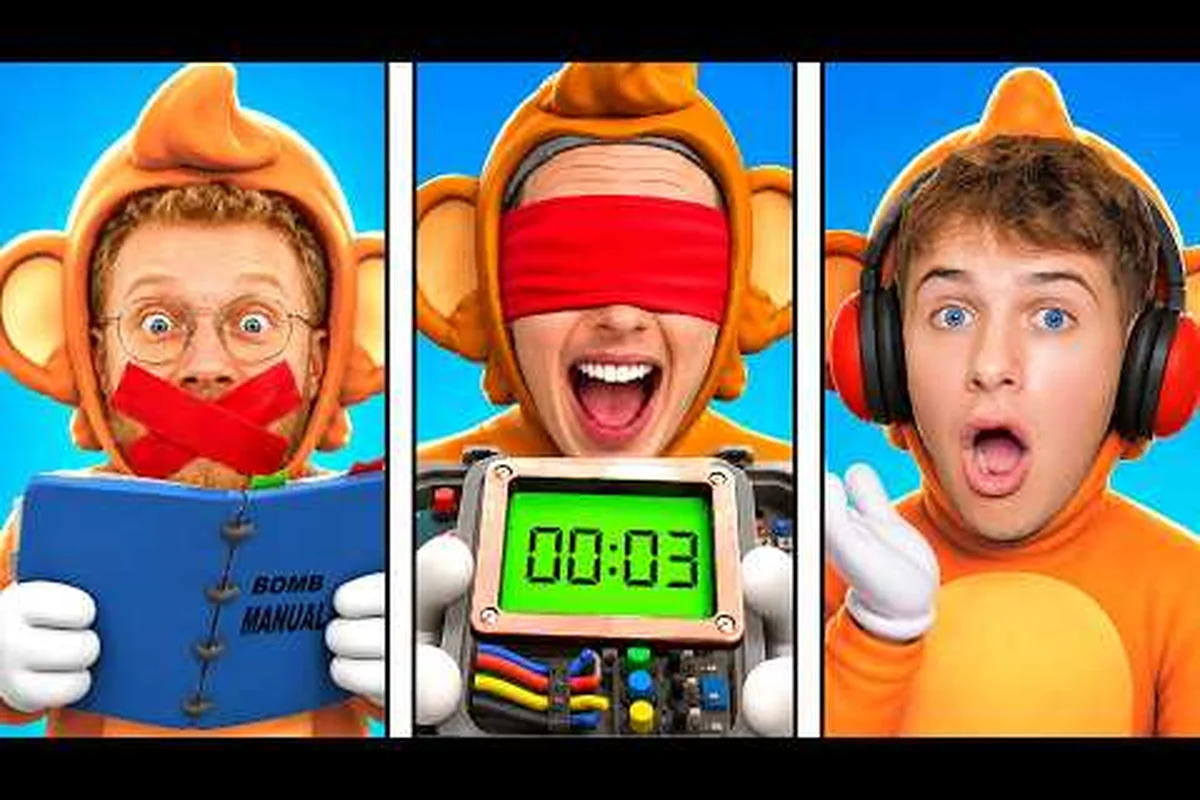
The BOMBANANA mute monkey cannot talk restriction is one of the most misunderstood mechanics in this chaotic three-player co-op defusal game, and getting it wrong turns a winnable round into a guaranteed explosion. The mute monkey actually can speak through voice chat, but they are completely blind to the bomb itself, which flips the entire communication dynamic on its head. Because the mute monkey is the only player who can read the manual, they become the strategic anchor of the team, even though they never see a single wire or module. Understanding exactly what the mute monkey can and cannot do is the difference between a smooth defusal and a banana-scented disaster, so let's break down the role's true capabilities and the workarounds that top teams use to win consistently.
BOMBANANA mute monkey cannot talk: what the role actually does
| Release Stage | Date | Platform | Key Details |
|---|---|---|---|
| Free Demo | June 15, 2026 | Windows, macOS | 5,066 reviews, 97% Overwhelmingly Positive; includes Free Mode |
| Full Release | September 2, 2026 | Windows 10/11 64-bit | Originally targeted August; delayed to September |
| Hot Fix | Post-release | Windows | Fixed Italian manual pages, Calculation Module info, lobby join, voice chat delay, emote wheel texture, mute blurry vision |
The core confusion around the BOMBANANA mute monkey cannot talk rule comes from the name itself, because the role's voice chat remains fully functional while their vision is completely restricted. When you spawn as the mute monkey, you see a blurred, nearly unreadable version of the bomb, which the official Steam page describes as part of the asymmetric information design where each player only holds part of the puzzle. What you do see clearly is the defusal manual, the instruction booklet that contains every wiring diagram, module solution, and button sequence needed to disarm the device. This makes the mute monkey the only team member who can actually read the manual and translate its instructions into actionable steps for the others.
The role's real limitation is that they cannot visually confirm what the blind monkey is touching or what the deaf monkey is hearing, so every piece of information must flow through verbal description and confirmation. According to the BOMBANANA! official Steam store page, the game is designed for exactly three players with each role holding partial information, and the mute monkey's partial information is the manual itself. This creates a fascinating dynamic where the mute monkey becomes the team's brain, but they rely entirely on the other two players to describe the physical state of the bomb back to them.
The mute monkey's field of vision explained
When you are playing the mute monkey, your screen shows the bomb as a heavily pixelated blur that makes it impossible to distinguish wire colors, count modules, or read any digital displays. The hotfix notes from the official Steam news page mention a fix for "mute player blurry vision issue," confirming that this visual restriction is an intentional core mechanic rather than a bug. What remains crystal clear on your screen is the manual, which you can flip through freely, and the voice chat interface that lets you communicate with your teammates in real time.
This means the mute monkey's job is to be the living encyclopedia of the operation, listening to the blind monkey describe what they see and cross-referencing that description with the manual's diagrams. The blind monkey can see the bomb perfectly but cannot read the manual, while the deaf monkey can see and read but cannot hear any instructions, which we will cover in detail later. The mute monkey bridges the gap by turning manual knowledge into spoken guidance, and this is where the BOMBANANA mute monkey cannot talk misconception causes real problems, because new players often stay silent thinking they are forbidden from speaking.
Why the mute monkey is the strategic anchor
The mute monkey's strategic value cannot be overstated, because they are the only player with access to the manual, which means every correct wire cut and every module solution originates from their instructions. In practice, the mute monkey should be the team's shot-caller, dictating exactly what the blind monkey should do next while the deaf monkey confirms visual details. The blind monkey physically touches the bomb and performs the actions, but they have no idea what those actions mean without the mute monkey's guidance.
This creates a command hierarchy where the mute monkey gives orders, the blind monkey executes them, and the deaf monkey verifies the results visually. The mute monkey's inability to see the bomb actually becomes an advantage because it forces them to develop precise, unambiguous language for describing actions, which reduces miscommunication across the entire team. Experienced players report that teams with a confident mute monkey who speaks clearly and decisively win significantly more rounds than teams where the mute monkey stays quiet or hesitates.
BOMBANANA who can read the manual: role-based information access
| Role | Communication Ability | Information Held | Key Constraint |
|---|---|---|---|
| Mute Monkey | Cannot talk | Full visual info (bomb layout, wires, modules) | Must use gestures/bananas to convey info |
| Blind Monkey | Can talk & hear | No visual info | Relies entirely on teammates' descriptions |
| Deaf Monkey | Can talk, cannot hear | Partial audio info (beeps, timers) | Cannot receive verbal instructions |
Understanding the BOMBANANA who can read the manual question requires mapping out the full information asymmetry across all three roles, because each monkey holds a different piece of the puzzle. The mute monkey is the sole reader of the manual, the blind monkey is the sole toucher of the bomb, and the deaf monkey is the sole hearer of audio cues, which creates a perfect triangle of incomplete information. The game's design forces all three players to combine their unique knowledge through communication, and any breakdown in that communication chain leads directly to failure.
| Role | Can Read Manual | Can See Bomb | Can Touch Bomb | Can Hear Audio | Can Speak |
|---|---|---|---|---|---|
| Mute Monkey | ✅ Yes | ❌ No (blurred) | ❌ No | ✅ Yes | ✅ Yes |
| Blind Monkey | ❌ No | ✅ Yes | ✅ Yes | ✅ Yes | ✅ Yes |
| Deaf Monkey | ❌ No | ✅ Yes | ❌ No | ❌ No | ✅ Yes |
This table reveals the surprising truth that the mute monkey is the only player who cannot see or touch the bomb, while the deaf monkey is the only one who cannot hear, and the blind monkey is the only one who cannot read. The BOMBANANA who can read the manual answer is always the mute monkey, and this exclusivity makes them indispensable to every successful defusal. The blind monkey's inability to read means they cannot verify whether a wire color matches the manual's description, so they must trust the mute monkey's instructions completely.
The information flow triangle explained
The communication flow in BOMBANANA follows a strict triangular pattern where information moves between roles in specific directions. The blind monkey describes what they see on the bomb to the mute monkey, who cross-references it with the manual and tells the blind monkey what to do, while the deaf monkey watches the bomb and confirms whether the blind monkey's actions are correct. The deaf monkey cannot hear any of this conversation, so they must rely on visual observation and the mute monkey's gestures to understand what is happening.
This creates a fascinating dynamic where the deaf monkey operates on pure visual information, watching the blind monkey's hands and the mute monkey's body language to piece together the situation. The BOMBANANA mute monkey gestures become critical here, because the mute monkey can use hand signals and pointing to communicate with the deaf monkey when voice instructions are not enough. Community reports from the official Discord server suggest that teams who develop a shared gesture vocabulary before starting a round significantly improve their win rates, because the deaf monkey can then understand complex instructions without hearing a single word.
Why the manual is the most valuable asset
The manual is arguably the most powerful item in the entire game, because it contains every solution needed to defuse any bomb configuration the game can generate. Without the manual, the blind monkey would be guessing at wire colors and button sequences, which is essentially a death sentence on higher difficulty levels. The mute monkey's exclusive access to this manual means they hold the team's fate in their hands, and their ability to quickly locate the right page and translate it into clear instructions determines the round's outcome.
The manual is organized into sections for each module type, including wire cutting, button pressing, keypad entry, and the infamous calculation module that requires math under pressure. The hotfix notes mention fixing "wrong information in the Calculation Module page," which shows that even the manual itself has been patched for accuracy since launch. Mute monkey players who memorize the manual's layout and can flip to the correct page in under two seconds give their team a massive advantage, because every second saved on information retrieval is a second added to the defusal timer.
BOMBANANA who can touch the bomb: the blind monkey's exclusive privilege
The BOMBANANA who can touch the bomb question has a single answer: the blind monkey is the only player physically allowed to interact with the device, which makes them the team's hands. The mute monkey cannot touch the bomb at all, and the deaf monkey also lacks this ability, so the blind monkey must perform every wire cut, button press, and module interaction. This restriction means the blind monkey's physical dexterity and ability to follow verbal instructions precisely are the team's most important mechanical skills.
The blind monkey's visual clarity is their greatest asset, because they see the bomb in perfect detail while the mute monkey sees only a blur and the deaf monkey sees it clearly as well. However, the blind monkey cannot read the manual, so they have no idea what any of the wires or buttons mean without the mute monkey's guidance. This creates a dependency relationship where the blind monkey must trust the mute monkey's instructions completely, even when those instructions seem counterintuitive.
The blind monkey's perspective and limitations
When playing the blind monkey, your screen shows the bomb in crystal-clear detail, including wire colors, module labels, and digital displays, but you have no access to the manual whatsoever. This means you can see exactly what needs to be done, but you have no idea how to do it, which is a uniquely frustrating and exhilarating position. The blind monkey must become an expert at describing what they see in precise, unambiguous terms, because the mute monkey needs those descriptions to find the right manual page.
The BOMBANANA blind monkey sees what question often confuses new players, because the name suggests they should be blind, but the opposite is true. The blind monkey sees everything clearly, but they are blind to the meaning of what they see, which is a clever twist on the traditional blind character archetype. Community data from the demo's overwhelmingly positive reviews suggests that players who embrace this role as a descriptive narrator rather than a decision-maker perform much better than those who try to guess solutions on their own.
How the mute monkey guides the blind monkey
The mute monkey's primary job is to translate manual knowledge into step-by-step instructions that the blind monkey can execute without understanding the underlying logic. This requires the mute monkey to develop a precise vocabulary for describing actions, such as "cut the third wire from the left, the red one" rather than vague instructions like "cut the red wire." The blind monkey must then confirm each action before performing it, saying something like "I see three wires, red, blue, and yellow, which one do I cut?" to ensure the mute monkey has the correct information.
This back-and-forth creates a call-and-response rhythm that experienced teams develop over time, where each instruction is confirmed before execution to prevent costly mistakes. The mute monkey should also ask the blind monkey to describe the bomb's layout at the start of each round, including how many modules are present and what types they appear to be, so the manual can be opened to the right section immediately. Teams that master this communication flow can defuse even the most complex bombs with time to spare, while teams that struggle with it often panic and make fatal errors.
BOMBANANA deaf monkey cannot hear: the silent observer's role
The BOMBANANA deaf monkey cannot hear restriction is the mirror image of the mute monkey's limitation, because the deaf monkey can see and read but cannot hear any audio information. This means the deaf monkey cannot hear the mute monkey's instructions, cannot hear the blind monkey's descriptions, and cannot hear the bomb's audio cues, which are often critical for solving certain modules. The deaf monkey must rely entirely on visual information and the mute monkey's gestures to understand what is happening and contribute to the defusal.
The deaf monkey's unique value comes from their ability to see the bomb clearly and read the manual, which means they can independently verify whether the blind monkey's actions are correct. However, because they cannot hear the conversation between the mute and blind monkeys, they must piece together the situation through observation and gesture-based communication. This makes the deaf monkey the team's quality control officer, watching for mistakes and using gestures to alert the mute monkey when something looks wrong. This makes the deaf monkey the team's quality control officer, watching for mistakes and using gestures to alert the mute monkey when something looks wrong, a dynamic that becomes even more critical when the team's vision is compromised, as detailed in our Bombanana Blind Monkey What To Do guide.
How the deaf monkey communicates without hearing
The deaf monkey's communication toolkit is surprisingly rich, because they can speak normally even though they cannot hear responses, and they can use the emote wheel to convey specific messages. The mute monkey can also use gestures and pointing to direct the deaf monkey's attention to specific parts of the bomb or manual, creating a visual communication channel that bypasses audio entirely. Community reports suggest that teams who develop a shared sign language for common instructions, such as "cut the wire" or "press the button," dramatically improve their coordination.
The deaf monkey should position themselves to watch the blind monkey's hands at all times, because they can see whether the correct wire is being cut or the correct button is being pressed. If the deaf monkey sees an error, they can wave their arms or use the emote wheel to alert the mute monkey, who can then correct the blind monkey's actions. This creates a visual feedback loop that compensates for the deaf monkey's lack of hearing, and teams that master this loop can operate almost as efficiently as teams with full communication.
The deaf monkey's unique advantages
Despite the communication challenges, the deaf monkey has two significant advantages that make them essential to the team. First, they can read the manual independently, which means they can verify the mute monkey's instructions and catch errors before they become fatal. Second, they are immune to audio-based distractions, which means they can focus entirely on visual information while the other two monkeys struggle with noisy environments or panicked shouting.
The deaf monkey's ability to read the manual and see the bomb simultaneously makes them a powerful second opinion, and experienced teams often use them as a safety net for the mute monkey's instructions. When the mute monkey gives an instruction that seems wrong, the deaf monkey can check the manual and use gestures to signal the correct action. This redundancy is invaluable on higher difficulty levels where a single mistake can end the round instantly, and it explains why the BOMBANANA deaf monkey cannot hear restriction is a feature rather than a flaw.
BOMBANANA mute monkey gestures: building a visual communication system
The BOMBANANA mute monkey gestures are the secret weapon of top teams, because they provide a communication channel that works even when voice chat fails or the deaf monkey cannot hear. The mute monkey can use hand signals, pointing, and the emote wheel to convey instructions to both the blind and deaf monkeys, creating a visual language that complements verbal communication. Developing a shared gesture vocabulary before starting a round is one of the most effective ways to improve your team's win rate, according to community reports from the official Discord server.
The most effective gesture systems use simple, unambiguous signals that can be recognized instantly, such as holding up fingers to indicate wire positions or pointing at the manual to indicate which page to reference. The mute monkey should also use exaggerated movements when communicating with the deaf monkey, because subtle gestures are easy to miss when the deaf monkey is focused on the bomb. Teams that practice their gesture system in the demo's free mode, which allows custom bomb design, can develop muscle memory that carries over to ranked matches.
Creating a gesture vocabulary that works
Building a gesture vocabulary requires deliberate practice and consistency, because every team member must understand the same signals in the same way. Start by defining gestures for the most common instructions, such as "cut the wire," "press the button," "look at the manual," and "stop," then expand from there as your team gains experience. The mute monkey should also establish a confirmation gesture that the blind monkey can use to signal that an instruction has been understood, such as a thumbs-up or a nod.
The emote wheel provides a built-in set of gestures that all players can use, including pointing, waving, and various emotional expressions that can convey urgency or approval. The hotfix notes mention fixing an "emote wheel texture stuck issue," which confirms that the emote system is an integral part of the game's communication toolkit. Teams that combine emote wheel signals with custom hand gestures create a rich visual language that covers most situations, and the mute monkey should practice switching between voice and gesture communication seamlessly.
When gestures beat voice communication
Gestures are often superior to voice communication in high-pressure situations, because they are faster, more precise, and immune to audio issues. When the timer is running low and everyone is panicking, a clear hand signal can convey an instruction faster than a shouted sentence, and it cannot be misheard or drowned out by background noise. Gestures are also essential for communicating with the deaf monkey, who cannot hear voice chat at all, making them the primary communication channel for that role.
The mute monkey should develop the habit of pairing every verbal instruction with a corresponding gesture, so that the deaf monkey can follow along even when they cannot hear the words. This dual-channel approach ensures that no information is lost due to the deaf monkey's hearing restriction, and it creates a backup communication path if voice chat experiences technical issues. The hotfix notes mention fixing a "voice chat delay issue," which shows that audio problems are a real concern, and teams that rely on gestures are better prepared to handle them.
Frequently Asked Questions
Can the BOMBANANA mute monkey talk in voice chat?
Yes, the mute monkey can speak normally through voice chat, and the name refers to their inability to see the bomb rather than a speech restriction. The mute monkey's voice is their most important tool, because they must translate manual instructions into clear verbal guidance for the blind monkey while also using gestures for the deaf monkey.
What happens if the mute monkey cannot see the bomb?
The mute monkey sees a heavily blurred version of the bomb that makes it impossible to identify wires, modules, or displays, but they can read the manual clearly. This forces them to rely on the blind monkey's verbal descriptions to understand the bomb's state, and they must cross-reference those descriptions with the manual to determine the correct actions.
Can the deaf monkey read the manual in BOMBANANA?
Yes, the deaf monkey can read the manual and see the bomb clearly, but they cannot hear any audio information, including voice chat and bomb audio cues. This makes them a valuable second opinion who can verify the mute monkey's instructions and catch errors, but they must communicate through gestures and visual signals rather than conversation.
Who is the only player that can touch the bomb?
The blind monkey is the only player who can physically touch and interact with the bomb, performing all wire cuts, button presses, and module solutions. The mute monkey and deaf monkey cannot touch the bomb at all, so the blind monkey must execute every action while relying on the mute monkey's manual knowledge and the deaf monkey's visual verification.
How do teams communicate with the deaf monkey effectively?
Teams communicate with the deaf monkey by pairing every mute monkey verbal instruction with a matching gesture from the emote wheel, while the deaf monkey watches the blind monkey's bomb interactions for confirmation. Build a shared gesture vocabulary before the round starts, since the deaf monkey verifies actions but hears nothing. Consistency beats speed when the timer hits ten seconds.