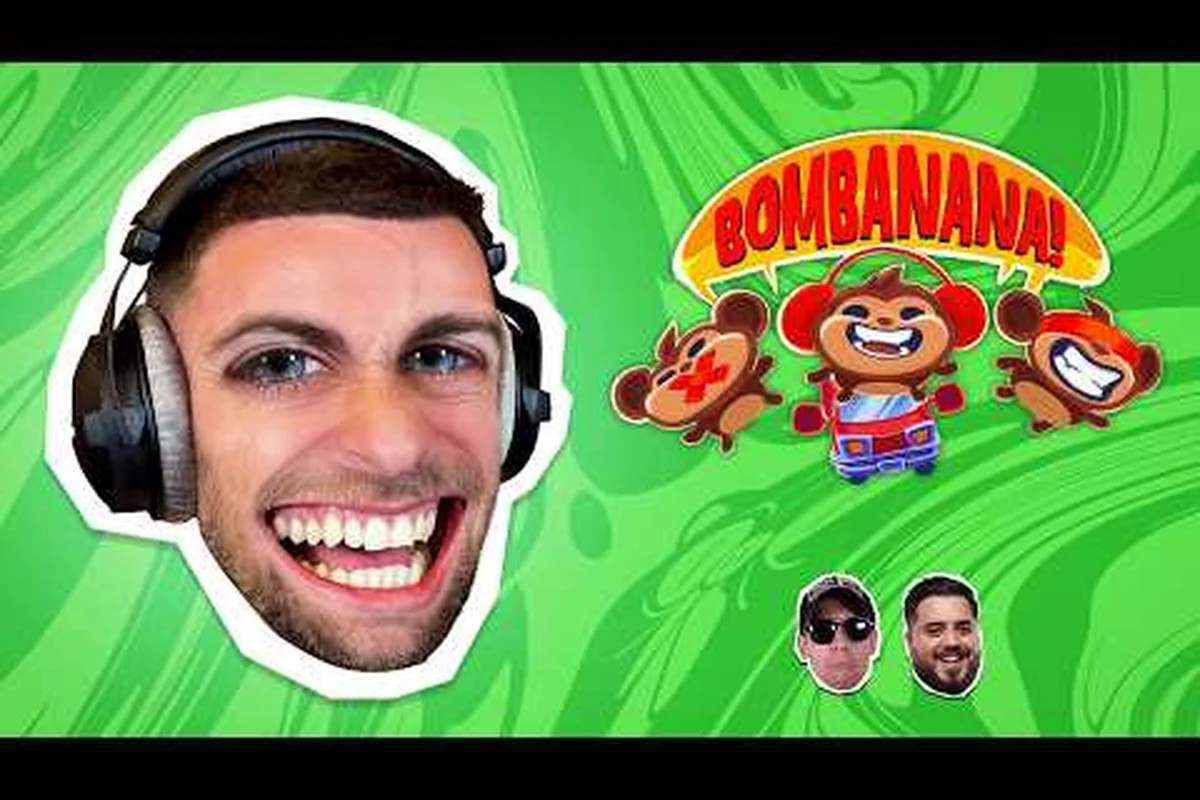
BOMBANANA! roles explained: blind, deaf, and mute monkeys is the first thing every new player needs to read before jumping into a lobby. This chaotic three-player co-op bomb defusal game, developed by Lefto Studio and published by TARK, drops you and two friends into a minivan turned mobile bomb workshop where each of you holds only a fraction of the information needed to succeed. The core hook is brutally simple: the blind monkey sees nothing, the deaf monkey hears no callouts, and the mute monkey cannot speak, forcing a communication puzzle that turns every defusal into a comedy of errors. Understanding these three asymmetric roles is not optional — it is the entire game, and getting the fundamentals right separates teams that defuse bombs with seconds to spare from those that explode before the timer hits zero.
The game launched on Steam on September 2, 2026, and the free demo, released June 15, 2026, already racked up 5,066 reviews with an Overwhelmingly Positive rating of 97 percent, according to the official store page. That reception tells you the role system works, but it also means lobbies fill fast with players who expect you to know your job. Whether you are planning to main one monkey or rotate through all three, this BOMBANANA roles explained guide breaks down each role's capabilities, limitations, and the exact communication strategies that make them click together.
The Three Monkeys: A Complete Role Breakdown
Every BOMBANANA match follows the same structure: three players, one bomb, and a handful of puzzle modules that need to be defused before the timer expires. The twist is that each player sees a different slice of the information pie, and no single monkey can solve a module alone. The blind monkey can see the bomb and the modules but cannot see the defusal manual, the deaf monkey can see the manual and the bomb but cannot hear any voice callouts, and the mute monkey can see everything but cannot speak or type. This creates a rock-paper-scissors dynamic where every piece of information must pass through at least one other player before it becomes actionable.
The asymmetry is deliberate, and it forces a specific flow of information that veteran teams internalize within a few rounds. The blind monkey describes what they see on the bomb, the deaf monkey reads the manual and gestures or types responses, and the mute monkey watches both and physically performs the defusal actions. Because the mute monkey cannot communicate verbally, they rely on the deaf monkey's written instructions and the blind monkey's verbal descriptions to know which wires to cut or which buttons to press.
| Role | Can See | Can Hear | Can Speak | Primary Job |
|---|---|---|---|---|
| Blind Monkey | Bomb and modules only | Yes | Yes | Describe module layouts verbally |
| Deaf Monkey | Manual and bomb | No | Yes | Read manual, type instructions |
| Mute Monkey | Everything | Yes | No | Perform physical defusal actions |
The BOMBANANA role list is intentionally short, but each role carries a distinct cognitive load that changes how you approach the game. The blind monkey is the team's eyes on the bomb, which means they need strong spatial awareness and the ability to describe complex visual patterns quickly. The deaf monkey is the team's memory, holding the manual's instructions and translating them into actionable steps despite being cut off from audio callouts. The mute monkey is the team's hands, executing every action while watching the full picture unfold without the ability to interject or correct anyone in real time.
Community reports from the official Discord server suggest that most teams naturally gravitate toward one role based on personality, but the best squads learn to rotate because each role trains a different skill set. The blind monkey develops descriptive precision, the deaf monkey develops visual reading speed, and the mute monkey develops pattern recognition and trust in their teammates. If you want the full breakdown of which role suits which playstyle, our BOMBANANA which role is best guide compares all three in depth.
Blind Monkey: The Team's Eyes on the Bomb
The blind monkey occupies the most stressful position in the game because they are the only player who can see the bomb's modules but cannot see the manual that explains how to defuse them. This means every action they take depends on their ability to describe what they see accurately enough for the deaf monkey to find the right manual page. The blind monkey must develop a consistent vocabulary for describing module layouts, wire colors, button positions, and display readouts, because the deaf monkey cannot see the bomb and the mute monkey cannot ask clarifying questions.
In practice, the blind monkey's job breaks down into three core tasks: scanning the bomb for active modules, describing each module's visual state in precise terms, and confirming when the mute monkey's actions produce the expected results. The hardest part is managing multiple modules simultaneously, because the timer does not pause while you describe one module and the team works on another. Experienced blind monkeys learn to prioritize modules by difficulty, calling out the most complex ones first while the deaf monkey flips through the manual.
Deaf Monkey: The Team's Memory and Translator
The deaf monkey holds the manual, which contains every defusal procedure for every module type in the game, but they cannot hear a single word their teammates say. This creates a fascinating communication puzzle because the deaf monkey must rely entirely on visual cues, typed messages, and the mute monkey's gestures to piece together what the blind monkey is describing. The deaf monkey role demands exceptional reading speed and the ability to translate manual pages into step-by-step instructions that the mute monkey can execute without verbal confirmation.
Because voice chat is useless for the deaf monkey, teams develop a visual communication system that includes pointing, nodding, and a shared set of hand signals. The mute monkey often becomes the intermediary, watching the blind monkey's descriptions and the deaf monkey's typed instructions simultaneously to ensure both are aligned. According to player experiences shared on the official Discord, the deaf monkey role becomes significantly easier once the team agrees on a fixed vocabulary for common module types, because the manual pages follow predictable patterns.
Mute Monkey: The Team's Hands and Final Check
The mute monkey can see everything — the bomb, the manual, and all the visual information — but cannot speak or type, which makes them the silent executor of the team's plan. This role is deceptively difficult because the mute monkey must resist the urge to correct teammates who are describing or reading something incorrectly, since they have no way to interject. The mute monkey must trust the process, wait for instructions, and execute actions precisely while watching for discrepancies between what the blind monkey describes and what the deaf monkey reads.
The mute monkey's unique advantage is that they see the full picture, which means they can catch errors that the other two miss. For example, if the blind monkey describes a red wire but the deaf monkey reads instructions for a blue wire, the mute monkey can hesitate or gesture to signal a problem. This makes the mute monkey the team's final quality check, and veteran teams learn to read subtle body language cues from their mute player to catch mistakes before they trigger an explosion.
Communication Systems and Callout Strategies
The heart of BOMBANANA is not the bomb defusal mechanics themselves but the communication systems that connect the three roles. Because each monkey has a different sensory limitation, the team must build a communication layer that routes information around those gaps. The game supports voice chat, text chat, and emote wheels, and each tool serves a different purpose depending on which roles are in play. Voice chat works for the blind monkey and mute monkey, who can both hear, but the deaf monkey is cut off from it entirely, which means critical instructions must also appear as text or visual cues.
Text chat becomes the deaf monkey's lifeline, but typing takes time, and the bomb timer does not wait. This is why the BOMBANANA deaf monkey callouts system matters so much — teams develop shorthand phrases and abbreviations that the deaf monkey can type quickly while the blind monkey continues describing the module. The emote wheel provides a third layer, offering pre-set gestures like pointing, nodding, shaking the head, and thumbs up that work for all three roles regardless of hearing or speech limitations.
| Communication Tool | Blind Monkey | Deaf Monkey | Mute Monkey |
|---|---|---|---|
| Voice Chat | Full access | No access | Full access |
| Text Chat | Full access | Full access | No access |
| Emote Wheel | Full access | Full access | Full access |
The emote wheel is the great equalizer because it works for every role, and teams that master it can defuse bombs with almost no verbal communication at all. The mute monkey relies on emotes to confirm actions, the deaf monkey uses emotes to acknowledge instructions, and the blind monkey uses emotes to signal when they spot a new module. Community testing suggests that teams who establish a clear emote hierarchy before the round starts defuse modules roughly 20 percent faster than teams who improvise mid-round, because everyone knows exactly what each gesture means.
Building a Shared Vocabulary
The single most effective strategy for improving your BOMBANANA performance is building a shared vocabulary with your regular teammates before you ever touch a bomb. This means agreeing on names for each module type, colors for wires, positions for buttons, and gestures for common instructions. The BOMBANANA three monkeys explained dynamic works best when all three players use the same terms, because it eliminates the translation lag that happens when the blind monkey describes a module one way and the deaf monkey searches the manual using different keywords.
Start by playing a few rounds with the same team and noting which descriptions cause confusion, then agree on standardized terms for those situations. For example, instead of saying "the module on the left side with the two buttons and the screen," agree to call it "the twin buttons module" and use that name consistently. The official Steam demo's free mode, which lets you design your own bomb, is the perfect training ground for building this vocabulary because you can practice specific module combinations without the pressure of a live timer.
Handling Information Bottlenecks
Every team hits information bottlenecks, moments where one player becomes overloaded and the whole defusal stalls. The most common bottleneck is the deaf monkey, who must read the manual, type instructions, and process visual cues simultaneously while cut off from voice chat. When this happens, the blind monkey should pause their description and let the deaf monkey catch up, because rushing forward only creates confusion that takes longer to untangle. The mute monkey can help by using emotes to signal when the deaf monkey has finished typing, giving the team a clear visual cue to resume the flow.
Another frequent bottleneck occurs when the blind monkey tries to describe multiple modules at once, overwhelming the deaf monkey's ability to process and relay the information. Veteran teams solve this by having the blind monkey focus on one module at a time, completing the full description and defusal before moving to the next. This sequential approach feels slower in the moment but actually saves time overall because it eliminates the back-and-forth corrections that happen when information gets jumbled. For a deeper look at how the deaf monkey can optimize their callout flow, check our BOMBANANA deaf monkey callouts guide.
Module Types and Role-Specific Responsibilities
BOMBANANA features a rotating set of puzzle modules that appear on each bomb, and every module type demands a different combination of role inputs. Some modules require the blind monkey to read a display and the deaf monkey to find the matching manual page, while others require the mute monkey to perform a sequence of button presses based on instructions relayed through the team. Understanding which modules play to which role's strengths helps teams assign responsibilities dynamically rather than sticking to rigid role definitions.
The Calculation Module requires the blind monkey to read a math problem displayed on the bomb, the deaf monkey to find the correct answer in the manual, and the mute monkey to enter the result using the keypad. The Wire Module has the blind monkey describe wire colors and positions while the deaf monkey reads the cutting order from the manual and the mute monkey physically cuts each wire. The Button Module presents a colored button with a label, and the team must determine whether to press and hold or press and release based on the manual's rules.
| Module Type | Blind Monkey Input | Deaf Monkey Input | Mute Monkey Input |
|---|---|---|---|
| Calculation | Reads the math problem | Finds answer in manual | Enters the result |
| Wire Cutting | Describes wire colors | Reads cutting order | Cuts the wires |
| Button Press | Describes button color | Reads press rules | Presses the button |
| Keypad Symbols | Describes symbol shapes | Maps symbols to positions | Presses in sequence |
The module variety keeps the game fresh because each type tests a different combination of skills, and teams that master all module types can handle any bomb the game throws at them. The demo's free mode is particularly valuable here because it lets you design bombs with specific module combinations, allowing you to drill the exact scenarios where your team struggles. According to the official Steam page, the full game includes additional module types beyond the demo, so building a flexible communication system early pays off when new modules appear.
Prioritizing Modules Under Time Pressure
When the timer is ticking down and multiple modules remain active, teams must decide which modules to tackle first and which to skip. The BOMBANANA all roles dynamic means that some modules are faster to solve than others, and prioritizing the quick wins can mean the difference between defusing the bomb and watching it explode. Community data from the demo suggests that Wire Modules are typically the fastest to solve because they require only color descriptions and a single cutting order, while Calculation Modules take longer because they involve reading, searching, and entering a multi-digit answer.
A common strategy is to have the blind monkey scan all active modules at the start of the round and call out which ones appear, allowing the deaf monkey to pre-flip to the relevant manual pages. This preparation phase takes only a few seconds but saves significant time later because the deaf monkey does not need to search for the right page mid-defusal. The mute monkey can also help by using emotes to indicate which module they want to tackle next, giving the team a clear visual priority order without requiring verbal discussion.
Handling Module Failures and Strikes
Every module has a failure condition, and triggering it adds a strike to the bomb, with three strikes causing an immediate explosion. This means teams must balance speed against accuracy, because rushing a module to beat the timer can backfire if it results in a strike that ends the run anyway. The BOMBANANA blind monkey guide approach emphasizes careful description over speed, because a wrong description cascades into a wrong instruction and a wrong action, wasting far more time than a few extra seconds of careful observation would have taken.
When a module failure occurs, the team should reset their communication flow rather than panicking and trying to rush the next module. The mute monkey can signal a reset by using a specific emote, the blind monkey should re-describe the module from scratch, and the deaf monkey should re-read the manual page to confirm the instructions. This systematic reset prevents the compounding errors that happen when teams try to recover mid-flow without re-establishing their baseline understanding.
Role Combinations and Team Dynamics
While every BOMBANANA match uses the same three roles, the way teams execute those roles varies dramatically based on player personalities, experience levels, and communication styles. Some teams run a strict hierarchy where the deaf monkey acts as the shot-caller, while others run a flatter structure where all three players contribute equally to the decision-making process. The BOMBANANA role combinations that work best depend on your team's strengths, and experimenting with different dynamics is part of the fun.
The most common team dynamic is the deaf monkey as director model, where the deaf monkey reads the manual, decides the order of operations, and issues instructions that the mute monkey executes while the blind monkey provides ongoing descriptions. This works well because the deaf monkey has the most complete information about the manual's procedures, making them the natural authority on how to solve each module. However, this model can break down when the deaf monkey becomes overwhelmed, because the entire team stalls waiting for instructions.
| Team Dynamic | Strengths | Weaknesses | Best For |
|---|---|---|---|
| Deaf Monkey as Director | Clear authority, structured flow | Bottlenecks on deaf monkey | Teams with a strong reader |
| Blind Monkey as Scout | Fast module detection, early prep | Manual lookup lags | Teams with a fast describer |
| Mute Monkey as Coordinator | Full picture, error catching | Cannot verbalize corrections | Teams with a patient mute player |
Another effective dynamic is the blind monkey as scout model, where the blind monkey rapidly scans and describes all modules upfront, giving the deaf monkey time to pre-read the relevant manual pages before any defusal begins. This model excels at preparation but can struggle when modules require mid-defusal adjustments, because the blind monkey's descriptions may not align perfectly with the manual's instructions. The mute monkey often becomes the glue in this model, using their full picture of the situation to catch discrepancies and signal corrections through emotes.
Switching Roles Mid-Session
BOMBANANA does not lock players into a single role, and teams can switch roles between rounds to keep things fresh or to adapt to different bomb configurations. Some players prefer to main one role and master it completely, while others enjoy rotating to experience the game from every perspective. The BOMBANANA role swap mechanic is simple — players just agree to trade positions before the next round starts — but the team dynamics shift significantly with each swap.
If your team decides to rotate roles, plan the rotation deliberately rather than switching randomly every round. Give each player a few rounds to settle into a role before swapping again, because the communication patterns that work for one role do not translate instantly to another. The blind monkey's descriptive vocabulary differs from the deaf monkey's manual-reading speed, and the mute monkey's patience under silence is a completely different skill from the blind monkey's verbal output. Our BOMBANANA role combinations guide covers rotation strategies and role-swap best practices in detail.
Adapting to Different Teammates
Playing with random teammates on the official Discord or through matchmaking presents a different challenge than playing with a regular squad, because you cannot rely on a shared vocabulary or established communication patterns. The BOMBANANA mute monkey guide approach changes when you play with strangers, because you cannot assume they understand your emote system or your preferred descriptive terms. In these situations, keep your communication simple and explicit, using standard terms for module types and avoiding inside jokes or shorthand that only your regular team understands.
The mute monkey role becomes particularly challenging with random teammates because you cannot explain your gestures or correct misunderstandings verbally. Veteran mute players recommend establishing a minimal emote vocabulary at the start of the round — a thumbs up for confirmation, a head shake for errors, and a point for direction — and sticking to those three signals exclusively. This minimalism prevents confusion and gives your random teammates a clear framework for interpreting your actions, even if they have never played with a mute monkey before.
Advanced Tips for Mastering Each Role
Once you understand the basics of each role, the next step is refining your individual skills to the point where your teammates can rely on you without constant verification. The BOMBANANA roles explained framework provides the foundation, but mastery comes from developing role-specific habits that reduce errors and speed up your team's defusal time. This section covers advanced techniques for each role, drawn from community testing and player experiences shared on the official Discord server.
For the blind monkey, the most valuable advanced skill is predictive description, which means anticipating what the deaf monkey needs to know before they ask. Instead of describing a module's visual state in raw terms, structure your description in the order the manual presents the information, so the deaf monkey can follow along without flipping back and forth. For example, if the manual asks about wire colors first, then positions, then the button label, describe the module in that exact order rather than describing whatever catches your eye first.
Blind Monkey: Building Descriptive Precision
The blind monkey's descriptive precision improves dramatically with practice, and the best way to train is to play the demo's free mode with a friend who acts as the deaf monkey while you practice describing modules without looking at the manual. The BOMBANANA blind monkey what to do approach starts with learning the standard module types and their key visual features, so you can describe them quickly without hesitation. Memorize the common wire colors, button labels, and display symbols, because these appear across multiple module types and form the building blocks of your descriptions.
Another advanced technique is layered description, where you first give a high-level overview of the module, then drill into the specific details the deaf monkey needs. For example, start with "wire module, four wires, two red, one blue, one yellow," then add positional information like "red wires are first and third from the left." This layered approach lets the deaf monkey start searching the manual while you continue providing details, effectively parallelizing the information flow.
Deaf Monkey: Speed Reading and Manual Navigation
The deaf monkey's biggest challenge is speed, because they must read the manual, process the blind monkey's descriptions, and type instructions all while cut off from voice chat. The BOMBANANA deaf monkey guide emphasizes developing a mental index of the manual's structure, so you know which page to flip to based on the blind monkey's description without searching. Most module types have a predictable manual layout, and learning these patterns cuts your lookup time significantly.
Typing speed also matters, and veteran deaf monkeys develop a set of abbreviations that they use consistently, such as "cut 1st red" instead of "cut the first red wire from the left." These abbreviations save precious seconds on every instruction, and they become second nature after a few sessions. The mute monkey also benefits from these abbreviations because they are shorter and easier to process visually, reducing the cognitive load of translating instructions into actions.
Mute Monkey: Reading the Full Picture
The mute monkey's advanced skill is pattern recognition, the ability to watch the blind monkey's descriptions and the deaf monkey's instructions simultaneously while catching discrepancies that could cause failures. The BOMBANANA mute monkey what to do approach involves developing a mental model of each module type, so you can predict what the correct action should be before the instructions arrive. This predictive ability lets you catch errors early, because you notice when the instructions do not match your mental model of the module.
The mute monkey also develops a unique form of patience, because they cannot interrupt or correct teammates who are making mistakes. Instead of getting frustrated, veteran mute players use their full picture to prepare for the next step, positioning themselves to execute the next action the moment the instructions arrive. This proactive stance makes the mute monkey feel like the team's silent anchor, providing stability even when the other two players are struggling to communicate effectively.
Frequently Asked Questions
What are the three roles in BOMBANANA?
The three roles are the blind monkey, who can see the bomb but not the manual; the deaf monkey, who can see the manual but cannot hear callouts; and the mute monkey, who can see everything but cannot speak. Each holds different information, forcing teams to combine voice, text, and emotes to defuse modules successfully.
Which BOMBANANA role is best for beginners?
The mute monkey is best for beginners. Since they can see the full bomb, you learn how modules like the Calculation Module work before specializing, though you cannot ask questions. The deaf monkey is the easiest alternative, as verbal description uses natural skills instead of requiring fast reading.
Can you switch roles during a BOMBANANA match?
Yes, teams can switch roles between rounds, and the game encourages experimentation with different role combinations. There are no restrictions on role swapping, so players can rotate freely to find the dynamic that works best for their team. However, switching roles mid-session requires adjusting communication patterns, so give each player time to settle into their new role.
How do you communicate with the deaf monkey in BOMBANANA?
The deaf monkey cannot hear voice chat, so teams must use text chat, the emote wheel, and visual gestures to communicate with them. Typing instructions is the primary method, but teams develop shorthand abbreviations to speed up the process. The emote wheel provides a universal communication layer that works for all three roles regardless of sensory limitations.
What happens if you trigger three strikes in BOMBANANA?
Triggering three strikes causes the bomb to explode immediately, ending the round in failure. Each module has a failure condition that adds a strike, so teams must balance speed against accuracy when defusing modules. The mute monkey's full picture of the situation helps catch errors before they result in strikes, making them a valuable safety net for the team.